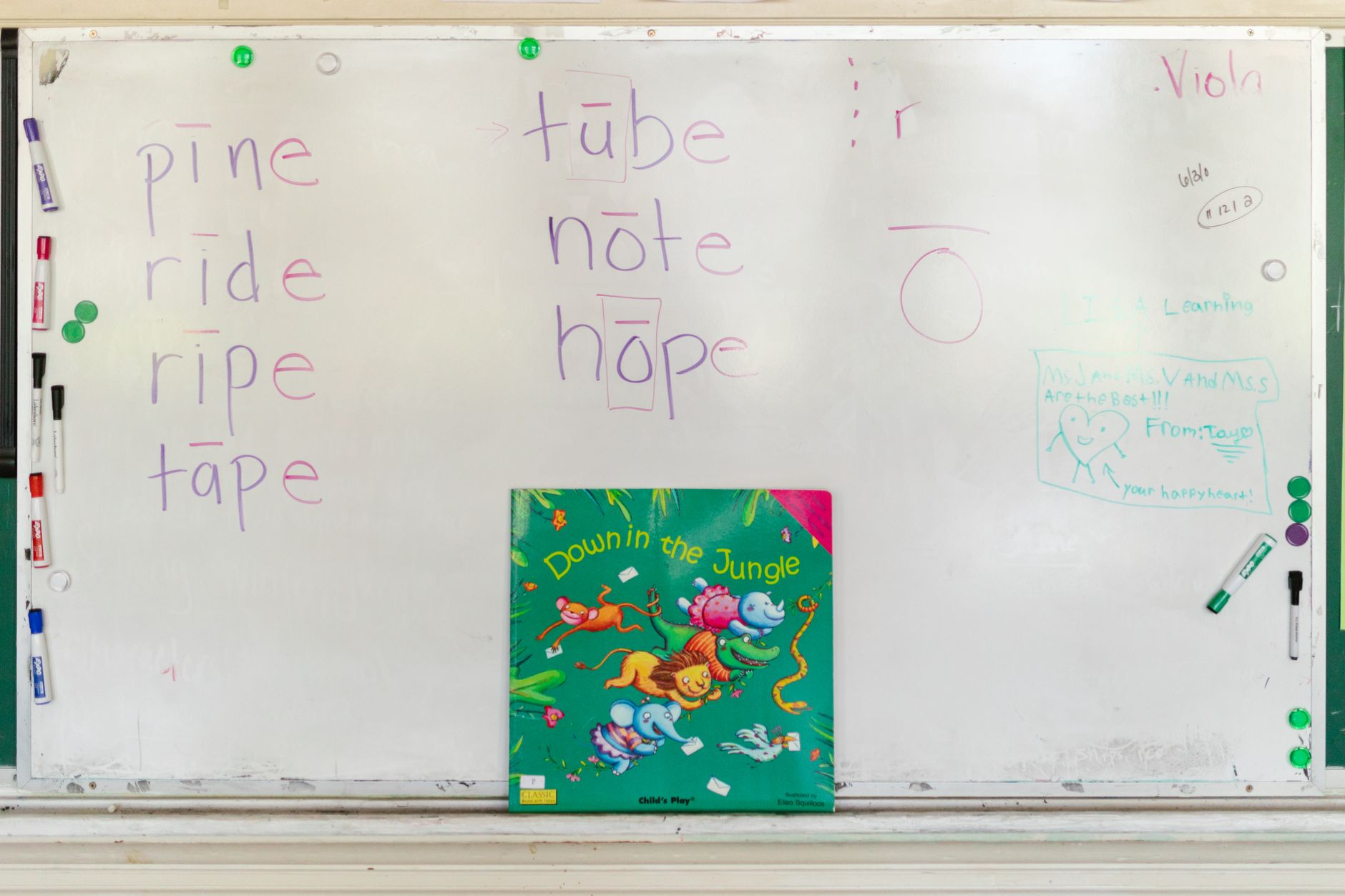
Word kinds are among one of the most effective, research-backed devices an instructor can utilize to aid pupils split the code of English punctuation. Rather than remembering arbitrary listings of words for a Friday examination, pupils contrast, comparison, and classify words by their audios and punctuation patterns. This hands-on strategy constructs authentic orthographic expertise that moves to analysis and creating throughout every quality degree.
In this overview, we’ll go through specifically just how to utilize word kinds to show punctuation patterns, from preschool with the top primary qualities. You’ll obtain functional regimens, grade-specific instances, and pointers for distinction so every student in your class advantages. Whether you’re a brand-new instructor or an experienced literacy trainer, these methods will certainly aid you make punctuation guideline stick.
What Are Word Types and Why Do They Function?
A word kind is an educational task in which pupils team words or photos according to shared functions– such as starting audios, vowel patterns, word households, or punctuation policies. Instead of merely remembering, pupils proactively evaluate words, notification patterns, and develop psychological classifications that sustain both analysis and punctuation. This “word research” strategy is rooted in the developing punctuation research study of scholars like Edmund Henderson and Donald Bear.
Word kinds function since they involve pupils in higher-order reasoning. When a kid makes a decision whether “rainfall” belongs with “train” or “pet cat,” they are contrasting audios, checking out letter patterns, and making generalizations. That cognitive job is what constructs lasting punctuation memory, much more than memorizing copy-and-write workouts ever before could.
There are 2 primary sorts of kinds you’ll utilize: shut kinds, where the instructor supplies the classifications, and open kinds, where pupils produce their very own classifications. Shut kinds are excellent for presenting a details pattern, while open kinds motivate exploration and conversation. Both belong in a well balanced word research regimen.
The Study Behind Word Research Study and Punctuation Growth
Years of research study in developing punctuation reveal that youngsters relocate with foreseeable phases as they discover to lead to. These phases– from rising doodling to traditional punctuation– educate just how we ought to series word kinds. When guideline matches a kid’s developing phase, finding out increases; when it does not, pupils either obtain burnt out or irritated.
Research studies continually reveal that word research creates more powerful punctuation gains than conventional memorization techniques. Due to the fact that pupils are arranging, contrasting, and describing their thinking, they maintain patterns much longer and use them to unknown words. This is the distinction in between understanding a word and understanding just how words function.
As you intend, bear in mind that punctuation growth isn’t purely connected to quality degree– it’s connected to a pupil’s specific phase. A 2nd may be operating at a very early within-word degree, while a 4th might still require assistance with brief vowels. Assessment-driven group is the essential to making kinds efficient.
Establishing a Word Kind Regimen in Your Class
A foreseeable once a week regular makes word kinds effective and efficient. Numerous instructors comply with a five-day cycle: present the kind on Monday, method and talk about on Tuesday and Wednesday, use with creating on Thursday, and examine on Friday. This rhythm offers pupils duplicated direct exposure without ending up being dull.
On intro day, version the kind on your own, believing out loud as you put words right into classifications. After that overview pupils with a common kind prior to launching them to arrange separately or in sets. Constantly comply with arranging with a conversation where pupils describe why words belong with each other– that talk is where the finding out lives.
Maintain products arranged and easily accessible. Usage word cards, pocket graphes, arranging floor coverings, and tape-recording sheets so pupils can take another look at kinds throughout facilities or independent job. A basic envelope system or identified baggie for each and every kind maintains your class running efficiently and allows pupils exercise repetitively.
Word Types for Preschool: Phonemic Understanding and Letter Seems
In preschool, word kinds concentrate on photos instead of words, considering that pupils are still developing phonemic recognition. Photo kinds aid youngsters listen to and contrast starting audios, finishing audios, and poetry patterns. As an example, pupils could arrange photos right into teams that start with/ m/ and/ s/, or photos that rhyme with “pet cat” versus “canine.”
As pupils discover letters, shift to kinds that link audios to letters. A starting consonant kind with photo cards and letter headers enhances the alphabetical concept. Maintain classifications to simply 2 or 3 each time so young students aren’t bewildered.
Preschool kinds ought to be brief, spirited, and extremely interactive. Usage tracks, motion, and great deals of spoken repeating. The objective isn’t ideal punctuation– it’s developing the audio recognition that will certainly make future punctuation guideline purposeful.
Very First Quality Word Sorts: Brief Vowels and Word Households
Very first quality is where pupils normally start arranging composed words, concentrating on brief vowel patterns and usual word households. Types such as “- at, -an, -ap” or “short a versus brief i” assistance pupils see just how altering one letter transforms the entire word. These patterns are fundamental for both decoding and punctuation.
Present CVC word kinds slowly, one vowel each time, after that blend vowels for comparison. Contrasting comparable audios– like brief/ e/ and brief/ i/, which are conveniently perplexed– is specifically important. Urge pupils to review each word out loud as they arrange to reinforce the sound-spelling link.
Consist of a mix of genuine words and a couple of rubbish words to make sure pupils are using the pattern instead of counting on memory. Recording sheets where pupils create arranged words strengthen punctuation and provide you a home window right into their reasoning.
2nd Quality Word Sorts: Blends, Digraphs, and Long Vowels
2nd await even more complicated patterns, consisting of consonant blends (bl, st, tr), digraphs (sh, ch, th, wh), and the several methods to lead to lengthy vowels. Types like “ai versus ay” or “quiet e versus brief vowel” assistance pupils browse the harder edges of English punctuation.
This is likewise a wonderful year to present vowel groups and r-controlled vowels (ar, emergency room, ir, or, ur). Contrasting kinds– such as arranging words with “ee,” “ea,” and “ey”– develop versatility and assistance pupils identify that the very same audio can be meant numerous methods.
Maintain kinds linked to your analysis and creating educational program. When pupils come across a brand-new pattern in a decodable message, strengthen it with a kind. This combination makes punctuation guideline really feel deliberate instead of detached.
3rd Quality Word Sorts: Syllable Patterns and Punctuation Regulations
By 3rd quality, pupils come across multisyllabic words and require methods for damaging them right into convenient components. Types concentrated on syllable types— shut, open, vowel-consonant-e, vowel group, r-controlled, and consonant-le– aid pupils decipher and lead to longer words with self-confidence.
3rd quality is likewise the ideal time to show punctuation policies clearly with sorting. The “increasing guideline” (when to increase a last consonant prior to including -ing or -ed), the “decline e” guideline, and the “adjustment y to i” guideline all offer themselves wonderfully to word kinds. Trainees contrast instances and non-examples, after that verbalize the guideline in their very own words.
Include kinds for usual prefixes and suffixes (un-, re-, -ful, -much less) to develop morphological recognition. Comprehending just how word components integrate assists pupils lead to and understand brand-new vocabulary concurrently.
4th Quality Word Sorts: Multisyllabic Words and Morphology
4th take on significantly intricate vocabulary, so word kinds ought to stress morphology– the research of word components. Types that team words by Greek and Latin origins (tele, chart, port, struct) or usual affixes strengthen both punctuation and vocabulary expertise.
Proceed syllable-type kinds with even more tough words, and include kinds for much less usual punctuation patterns like “ough,” “augh,” and “ph.” These uneven patterns call for repetitive direct exposure and contrast, which kinds supply successfully.
Urge pupils to gather their very own words from checking out for open kinds. When pupils bring words they have actually observed in their publications, meaning guideline comes to be genuine and student-driven– a trademark of efficient word research.
5th Quality and Beyond: Advanced Patterns and Word Beginnings
Upper primary and intermediate school pupils take advantage of kinds that check out word beginnings and progressed punctuation conventions. Types based upon Greek origins, Latin origins, and words obtained from various other languages (like French “- que” or Italian “- etto”) link meaning to background and significance.
At this degree, kinds can likewise concentrate on complicated homophones (their/there/they’re, affect/effect), scholastic vocabulary, and content-area terms. Arranging these words by significance and use enhances exact punctuation in context.
Older pupils value the “why” behind punctuation, so set kinds with short etymology conversations. Comprehending that “phone” originates from Greek for audio makes the “ph” punctuation remarkable and fascinating.

Shut Types vs. Open Up Types: When to Make use of Each
Shut kinds provide pupils established classifications and are best for presenting a brand-new pattern with clear contrasts. They supply framework and make sure pupils concentrate on the target attribute. Usage shut kinds early in a cycle when pupils require assistance.
Open up kinds welcome pupils to uncover classifications by themselves, advertising inquisitiveness and much deeper evaluation. They’re excellent for testimonial, for developing conversation, and for pupils that await even more difficulty. Open up kinds likewise disclose what pupils currently discover concerning words.
Numerous instructors integrate both within a week: begin with a shut kind to show the pattern, after that transfer to an open kind where pupils discover brand-new methods to organize the very same words. This development constructs self-reliance and crucial reasoning.
Exactly How to Set Apart Word Types for Diverse Learners
Due to the fact that meaning growth differs extensively within any kind of class, distinction is important. Make use of a punctuation stock or developing analysis to team pupils by phase instead of quality. After that appoint kinds that match each team’s requirements, also if that suggests numerous kinds running concurrently.
For pupils that require assistance, supply photo signs, less classifications, or companion sorting with instructor assistance. For innovative pupils, provide open kinds, difficulty words, or chances to create sentences and tales utilizing their arranged words.
Maintain the regular constant throughout teams so monitoring remains straightforward. Everybody kinds, talks about, and documents– just words and patterns vary. This framework appreciates specific requirements without wreaking havoc.
Making Word Sorts Interactive and Engaging
Word kinds do not need to be fixed. Transform them right into video games with timed difficulties, companion races, or “rate kinds” where pupils race to put cards appropriately. Movement-based kinds– like having pupils literally hold word cards and stand in group teams– include power and strengthen understanding.
Usage modern technology to expand arranging method. Digital arranging tasks, interactive white boards kinds, and word research applications provide pupils added repeating in interesting styles. Simply make sure the electronic variation still needs pupils to consider patterns, not simply touch and think.
Commemorate explorations by having pupils share “aha” minutes– times they discovered a pattern, located an exemption, or linked a kind to their analysis. This sharing constructs a class society where word research is interesting and collective.
Examining Punctuation Development With Word Sorts
Analysis in word research exceeds Friday punctuation examinations. Observe pupils throughout arranging to see if they can describe their thinking. Gather tape-recording sheets to look for precise punctuation and pattern application. Usage fast “blind kinds”– where pupils arrange words they have not seen– to check transfer.
Regular punctuation supplies aid you track developing development and readjust teams. Contrast beginning-of-year and mid-year outcomes to commemorate development and determine locations requiring even more assistance. This data-driven strategy guarantees your kinds remain targeted.
Bear in mind that the objective is application, not simply precision on a kind. Try to find proof that pupils utilize their punctuation expertise in day-to-day writing– that’s the supreme step of success.
Usual Errors to Stay Clear Of When Instructing With Word Types
One usual blunder is missing the conversation. Arranging without speaking about why words belong with each other transforms an effective task right into a coordinating video game. Constantly integrate in time for pupils to describe their reasoning and listen to others’ thinking.
An additional mistake is making use of kinds that are also simple or also difficult. If pupils kind completely without idea, words are also straightforward; if they think arbitrarily, the pattern is also innovative. Suit kinds to developing phase, not quality degree alone.
Ultimately, prevent dealing with kinds as separated busywork. Link them to analysis, creating, and vocabulary guideline so pupils see punctuation as component of a significant proficiency system. Assimilation is what makes word research stick.
Incorporating Word Types With Reviewing and Composing Guideline
Word kinds are most effective when they’re woven right into the material of your proficiency block. After presenting a pattern, search for it in common analysis messages and emphasize instances with each other. Urge pupils to quest for words that fit the pattern throughout independent analysis.
In creating workshop, advise pupils to use their punctuation patterns and utilize their word research note pads as recommendations. When a pupil appropriately uses a freshly discovered pattern, name it and commemorate it– this enhances transfer.
Vocabulary guideline likewise sets normally with word kinds. Arranging words by significance, origin, or attach builds both punctuation and understanding. The even more links pupils make, the much deeper their word expertise comes to be.
Structure a Year-Long Word Research Study Extent and Series
A solid word research program adheres to a rational development throughout the year, relocating from easier to a lot more intricate patterns. Begin with testimonial and analysis, after that series kinds that improve each various other– brief vowels soon vowels, solitary syllables prior to multisyllables, base words prior to affixes.
Straighten your extent and series with your grade-level requirements and checking out educational program, yet remain adaptable. If analysis reveals pupils require even more time on a pattern, readjust. Receptive training defeats stiff pacing every single time.
Share your extent and series with households so they comprehend the strategy and can sustain method in the house. A basic review letter or e-newsletter assists moms and dads see the worth of word research over conventional punctuation listings.
Often Asked Concerns Concerning Word Types
Exactly how frequently should I do word kinds? Go for a regular once a week cycle, with 10– 15 mins of arranging method numerous days a week. Uniformity issues greater than size– brief, concentrated sessions defeat periodic lengthy ones.
Should I still provide conventional punctuation examinations? You can, yet make them pattern-based instead of memorization-based. Analyze whether pupils can lead to brand-new words that comply with the pattern, not simply the exercised listing. This determines genuine understanding.
Suppose my pupils are much listed below quality degree? Begin where they are developmentally, not where the grade-level listing claims. Usage analysis to discover their phase and develop from there. Development occurs when guideline matches preparedness.
Can word kinds operate in upper grades? Definitely. Morphology, etymology, and content-area vocabulary kinds are extremely efficient for older pupils and maintain punctuation guideline pertinent and fascinating.
Final Thought: Equip Trainees With Pattern-Based Punctuation
Word kinds change punctuation guideline from memorizing memorization right into energetic, purposeful understanding. By matching kinds to developing phases and grade-level patterns, you aid pupils uncover just how English meaning jobs– which expertise lasts much past any kind of solitary word listing.
Begin tiny: select one pattern, develop a kind, and dedicate to the conversation that adheres to. As your regular holds, you’ll see pupils observing patterns all over, using them in their writing, and expanding as positive spellers and viewers.
All set to bring word research to life in your class? Discover our Alabama Analysis collection for word kind cards, grade-level extent and series, and analysis devices– after that share your class successes with our area of teachers. Your pupils’ punctuation development begins with one tactical kind.

Education writer and literacy advocate specializing in early reading instruction, K–3 literacy policy, and evidence-based learning strategies. Dedicated to sharing practical insights on the Science of Reading, literacy coaching, and instructional resources to support educators, parents, and communities in improving student reading achievement.